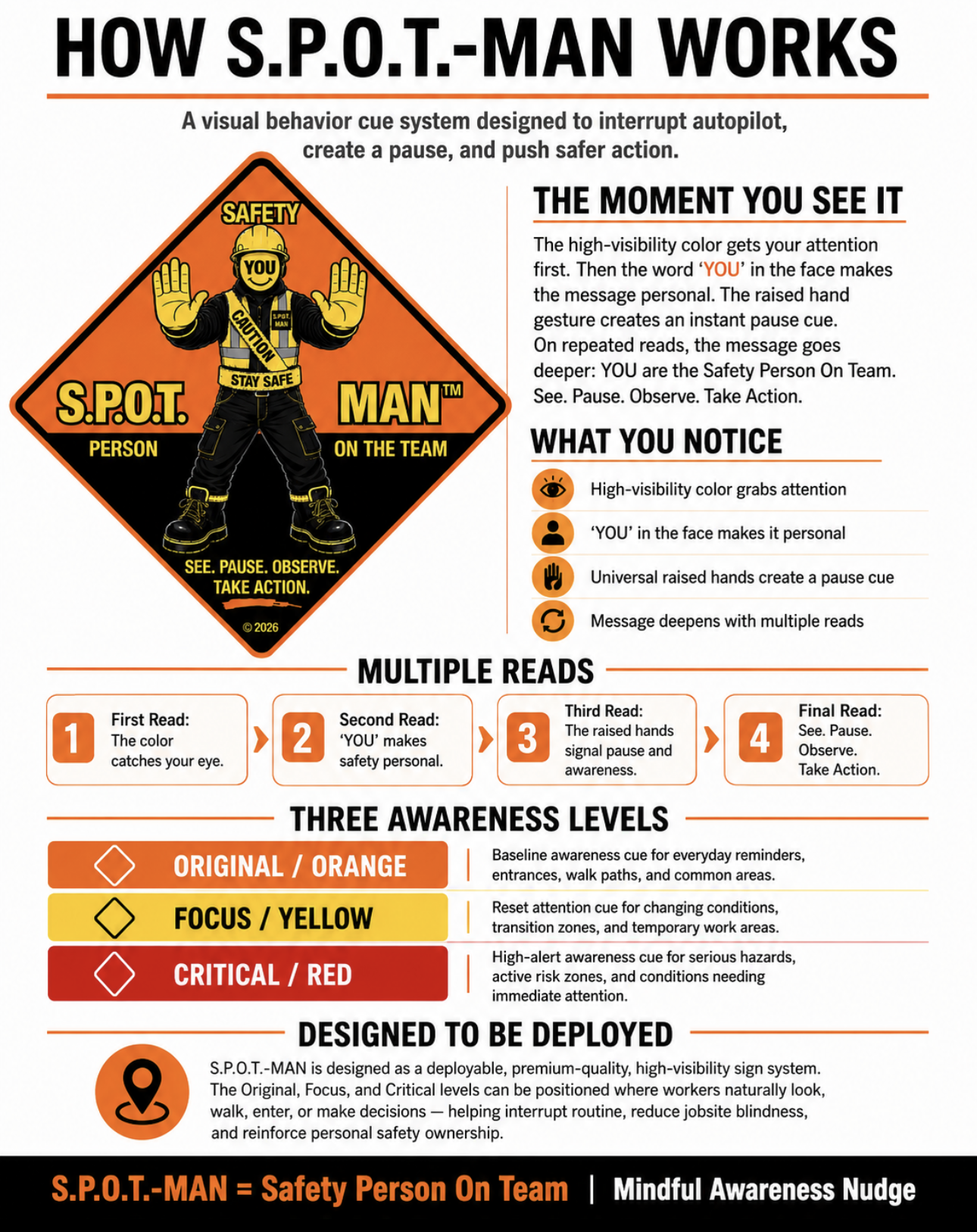
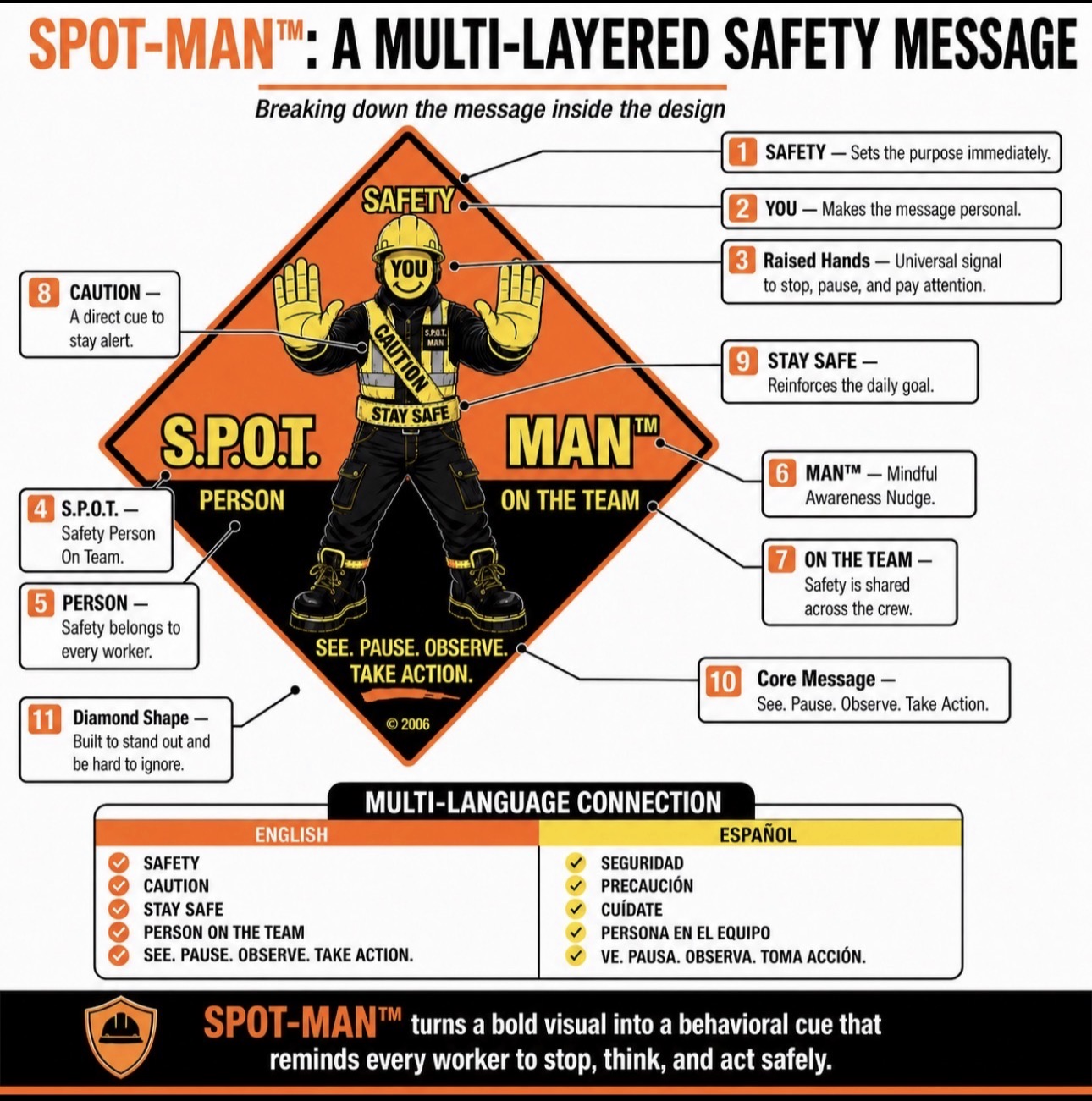
SEE. PAUSE. OBSERVE. TAKE ACTION.
SEE: Notice what others miss. Look for hazards, changes, and odd behavior without assuming.
PAUSE: Stop autopilot. Take a moment to reassess risk and refocus.
OBSERVE: Gather facts, not stories. Check cues, patterns, and context. Confirm your expectations.
TAKE ACTION: Do the right thing — give a corrective cue, escalate, or call emergency help. Action is everyone’s responsibility.
Levels:
Regular: routine watch — checklists, quick cues, polite corrections.
Focused: higher alert — targeted checks, active coaching, temporary controls.
Critical: full response — immediate escalation, isolation, emergency procedures.
Purpose: Break mindful blindness. Give everyone the power to stop unsafe behavior and build a culture that sees, questions, and acts on safety — every time.
Bold. Direct. Relentless. S.P.O.T.-MAN.
how To use S.p.ot.man
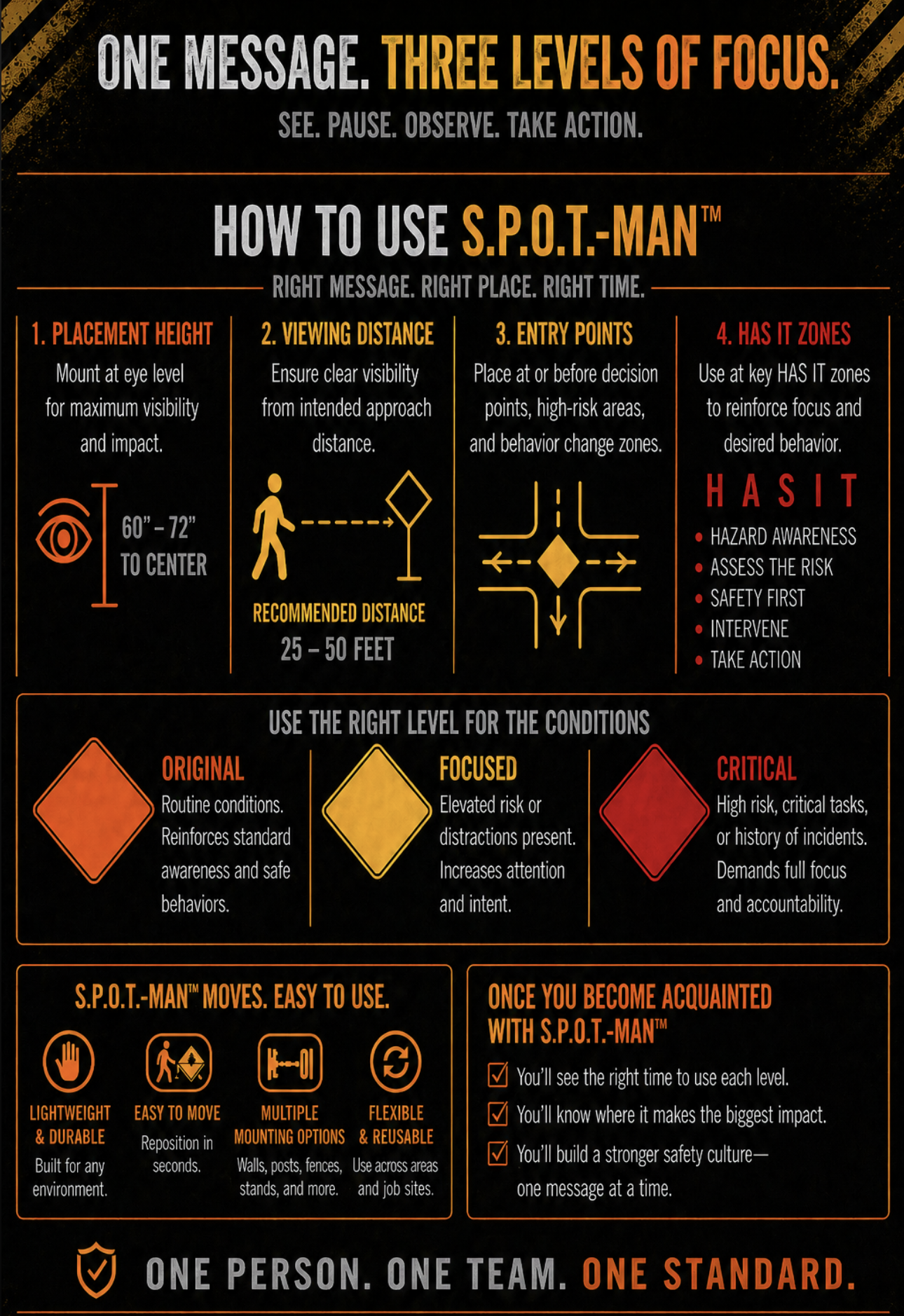
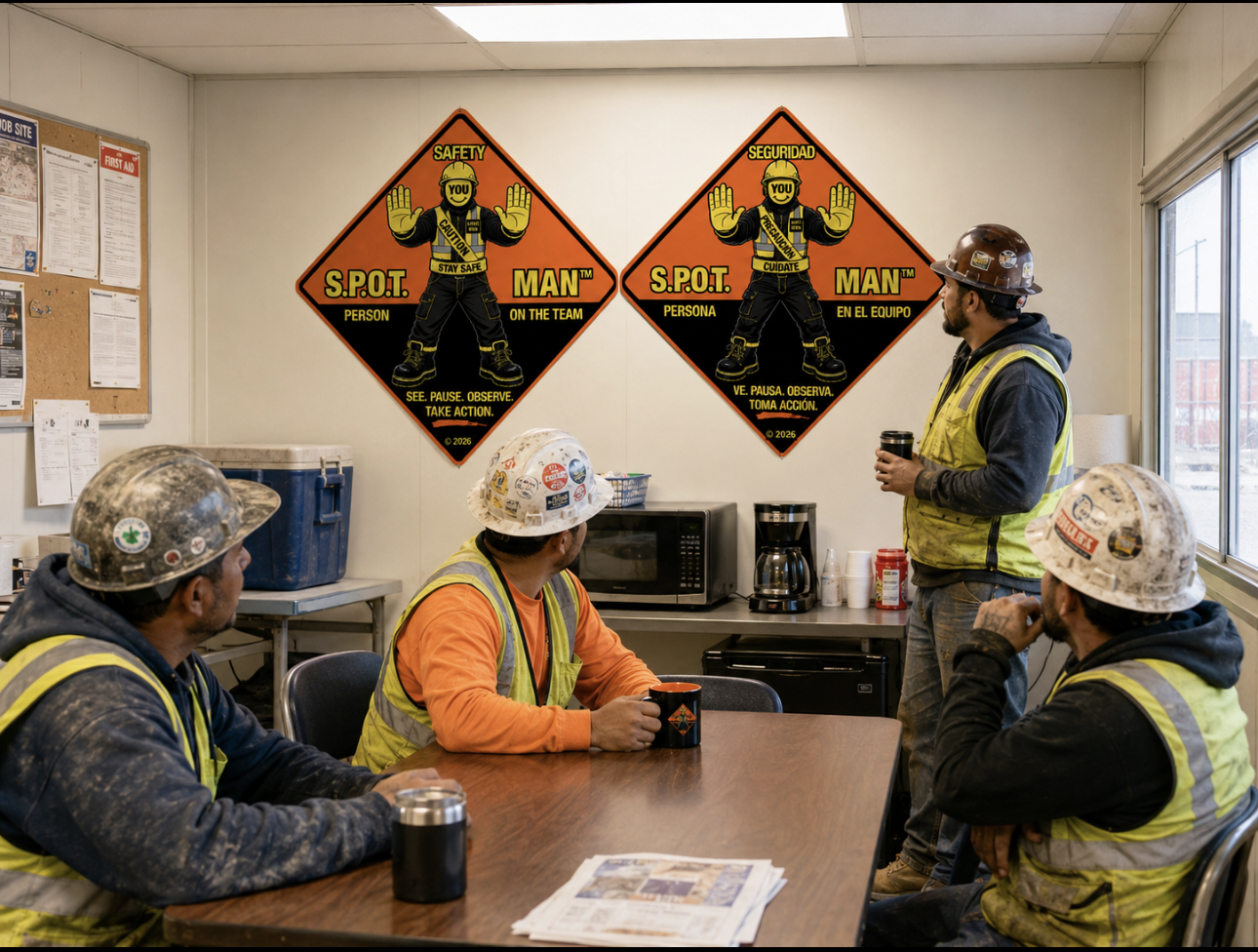
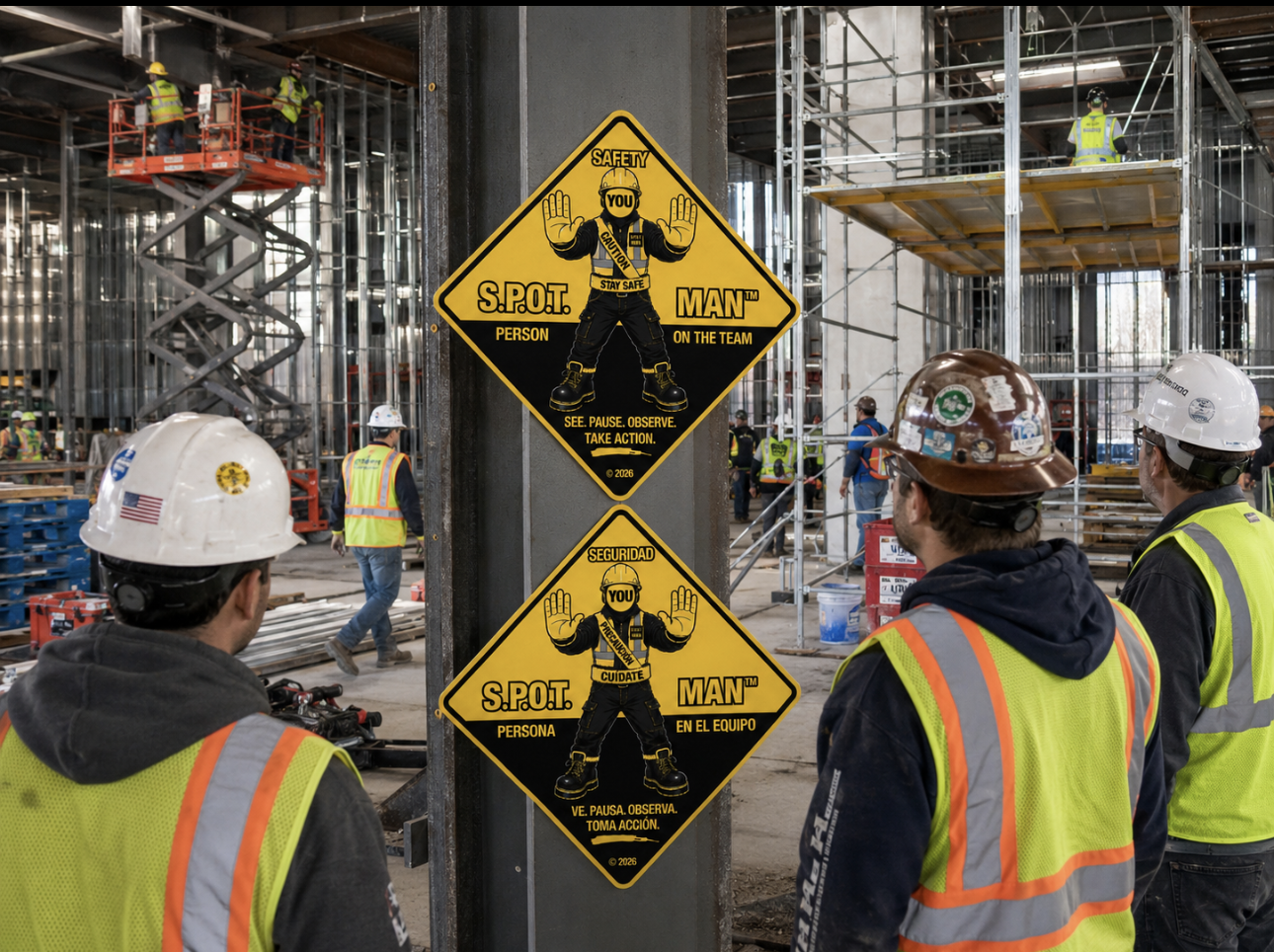
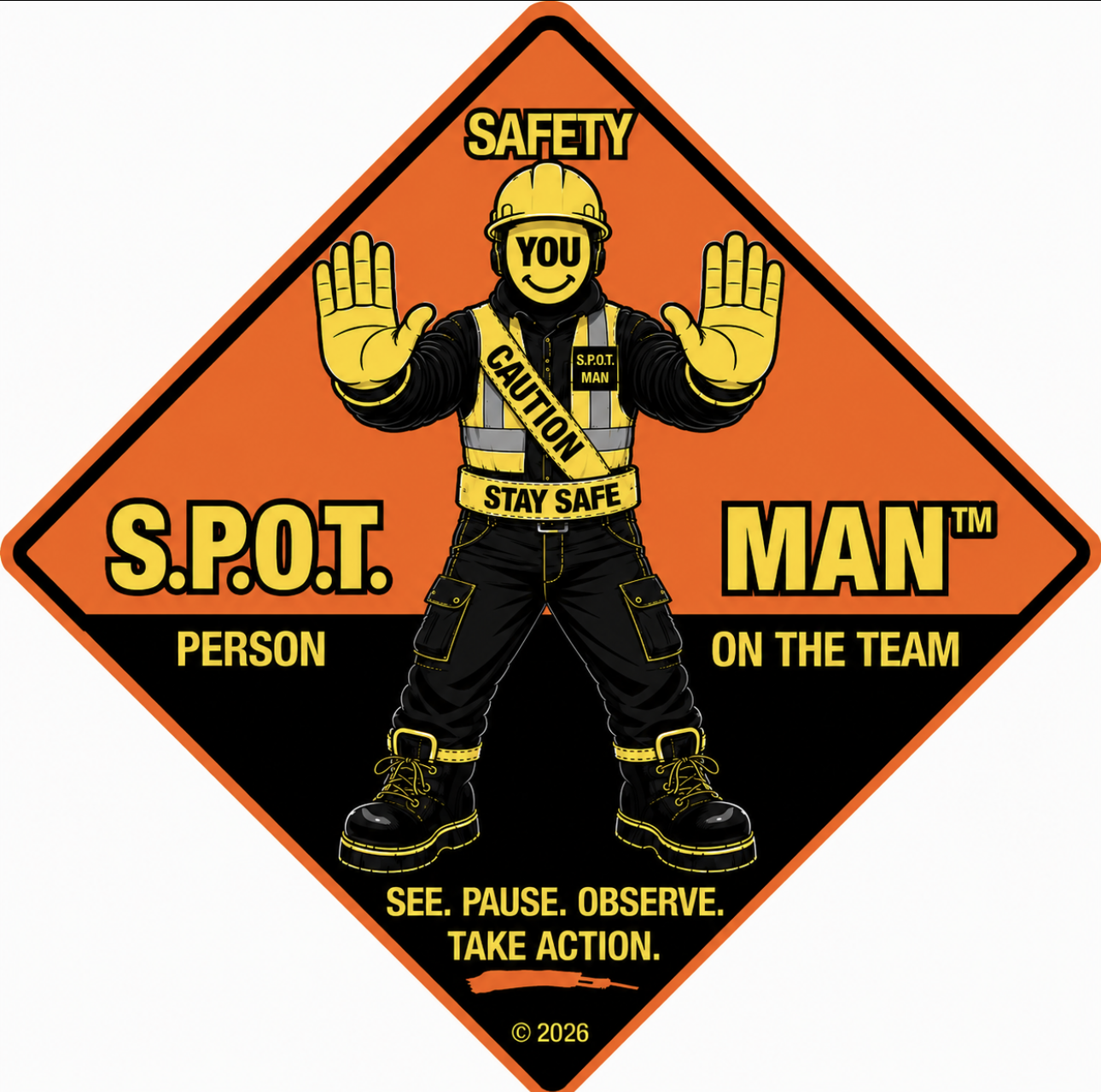
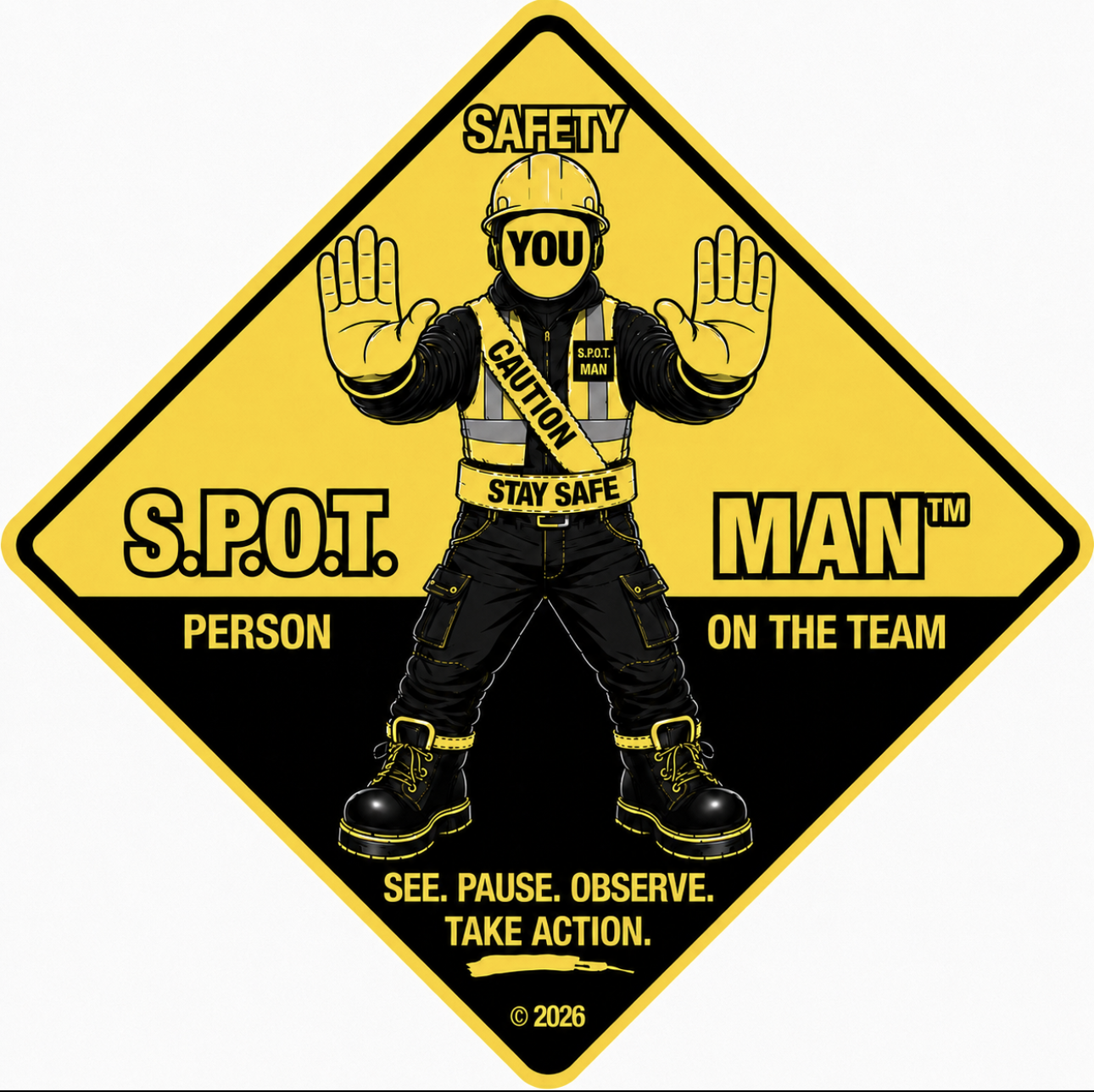
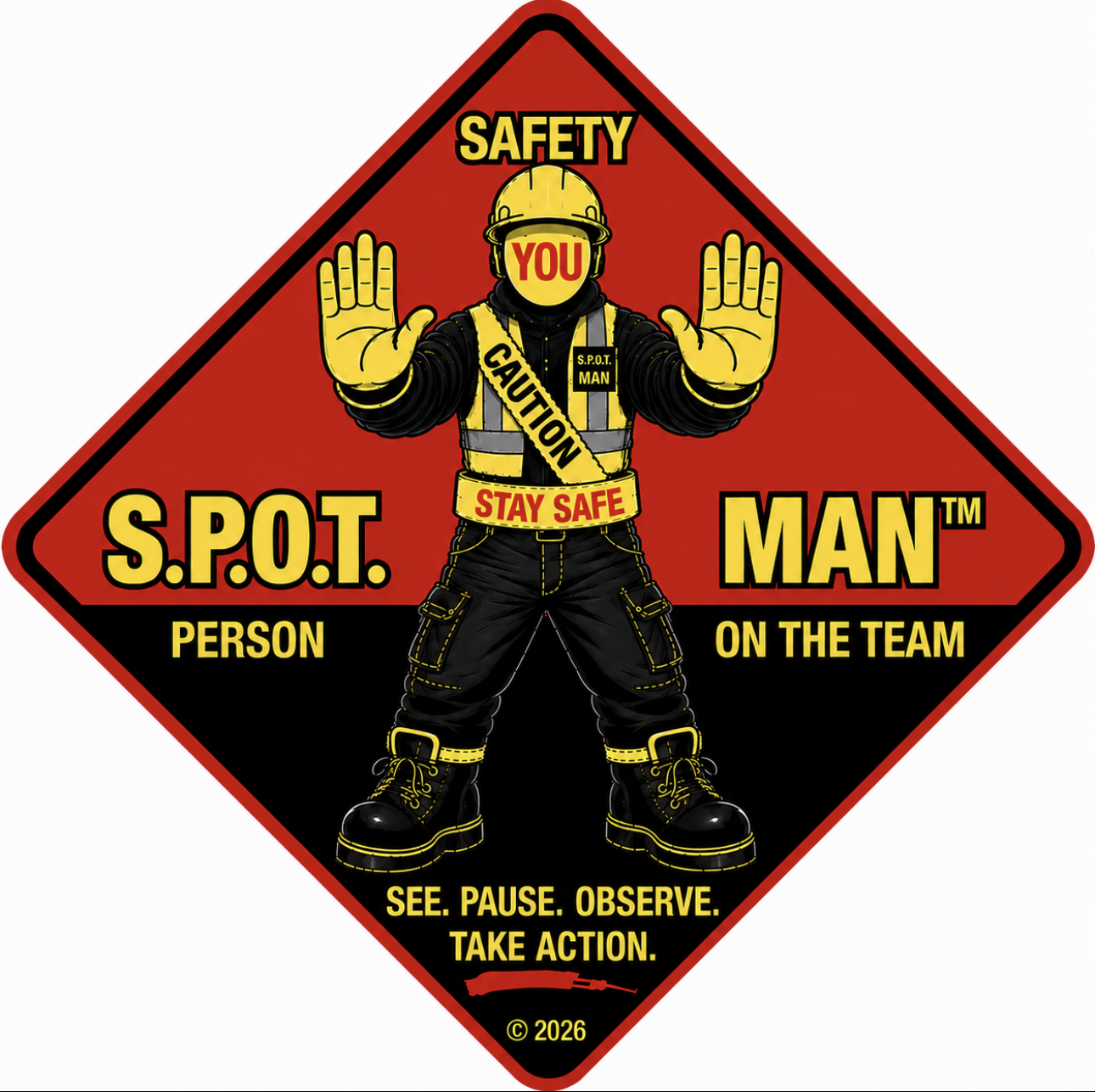
Use S.P.O.T.-MAN™ where it can interrupt autopilot before the worker enters the risk. Mount it at eye level — about 60–72 inches to center — with a clear 25–50 foot viewing distance. Place units near entrances, turns, staging areas, decision points, or changing work zones so the cue appears before the hazard, not after.
Match the color level to the condition:
Original — routine awareness and general safety reminders.
Focused — elevated risk or high-distraction environments where attention needs sharpening.
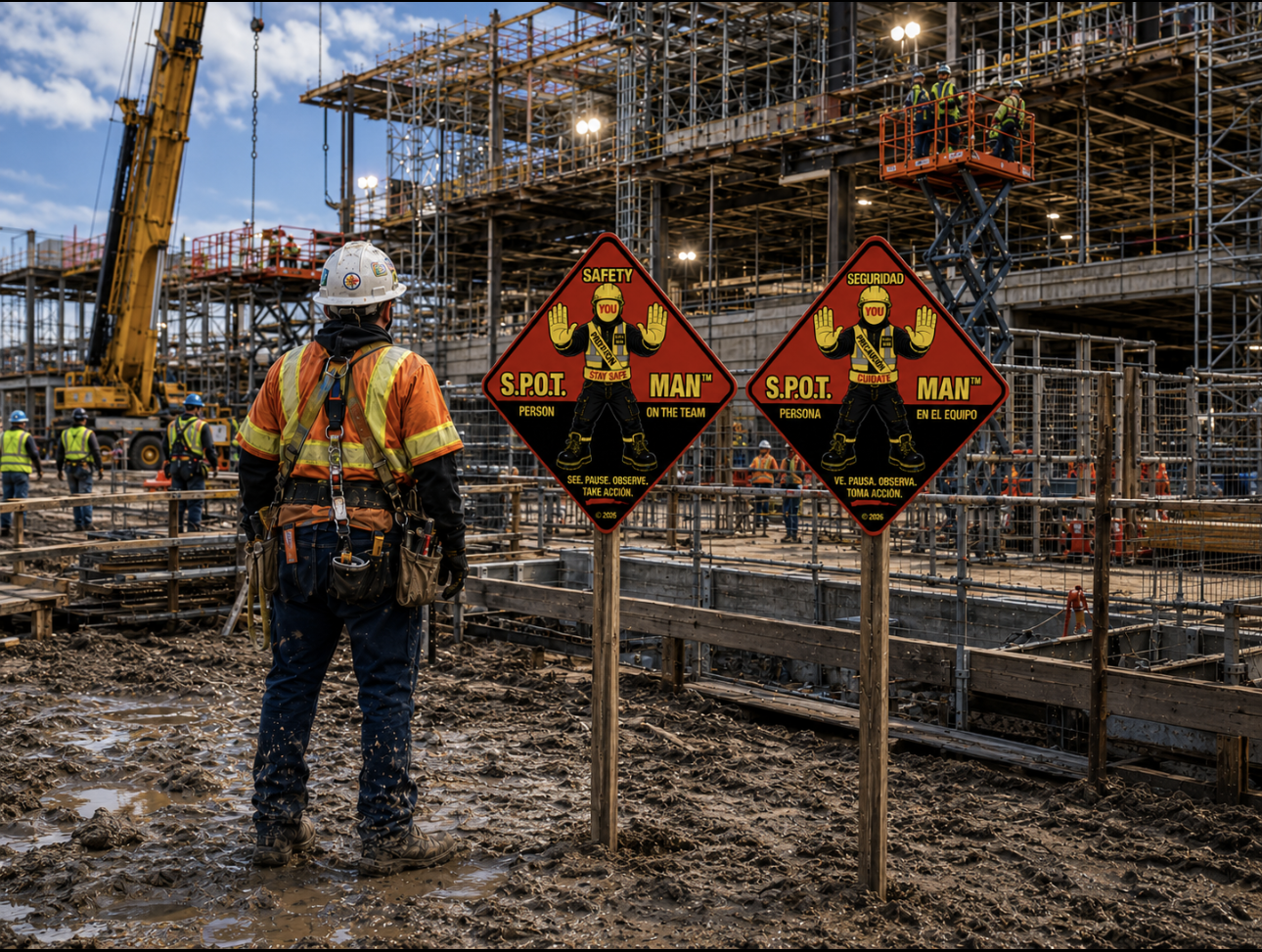
Critical — high-risk tasks, incident-prone areas, or when immediate, unmistakable action is required.
When the threat moves, S.P.O.T.-MAN™ moves with it — keeping the safety cue visible, timely, and impossible to ignore. Mount, position, and color-code S.P.O.T.-MAN™ to interrupt autopilot, guide decisions, and reduce exposure to harm.