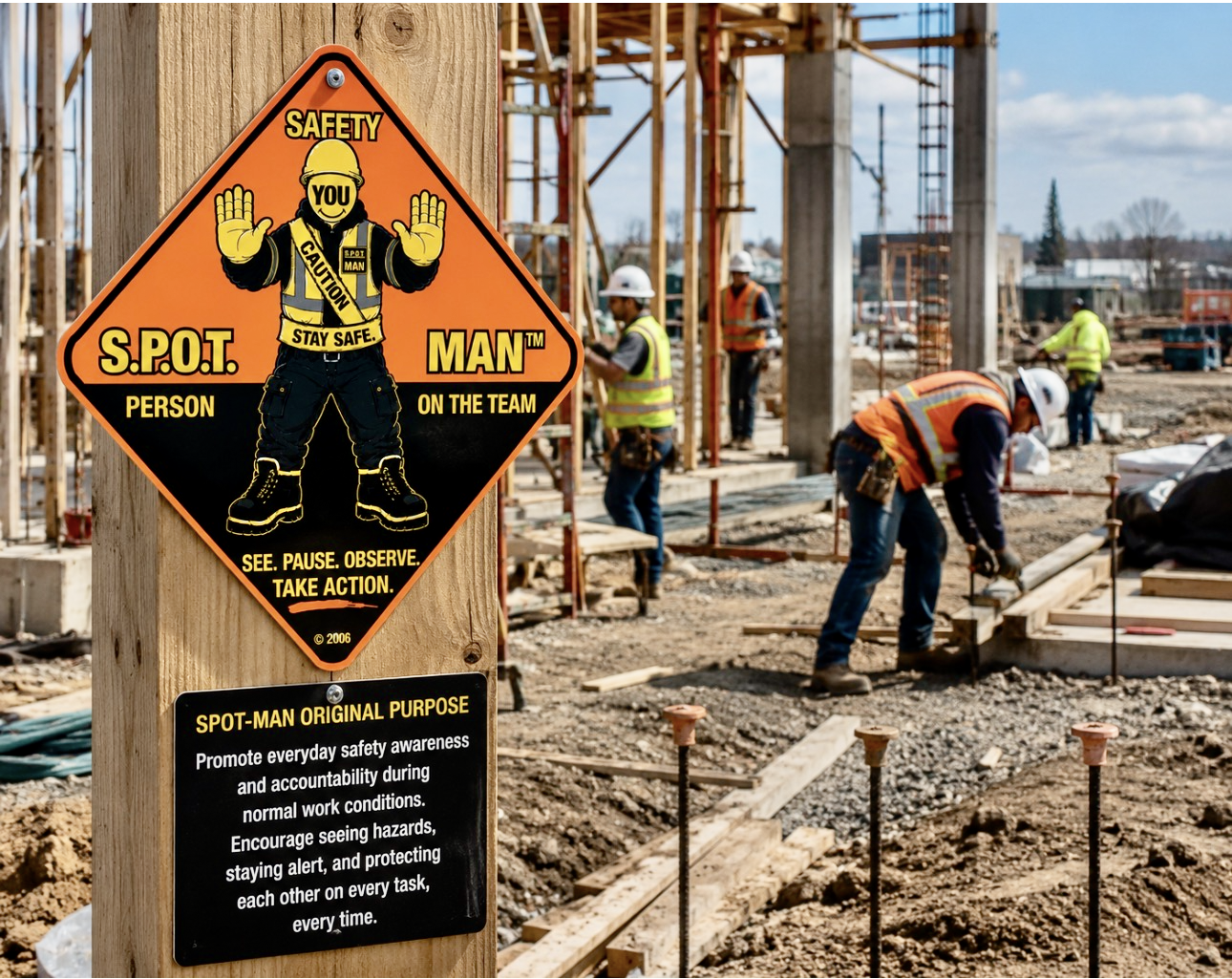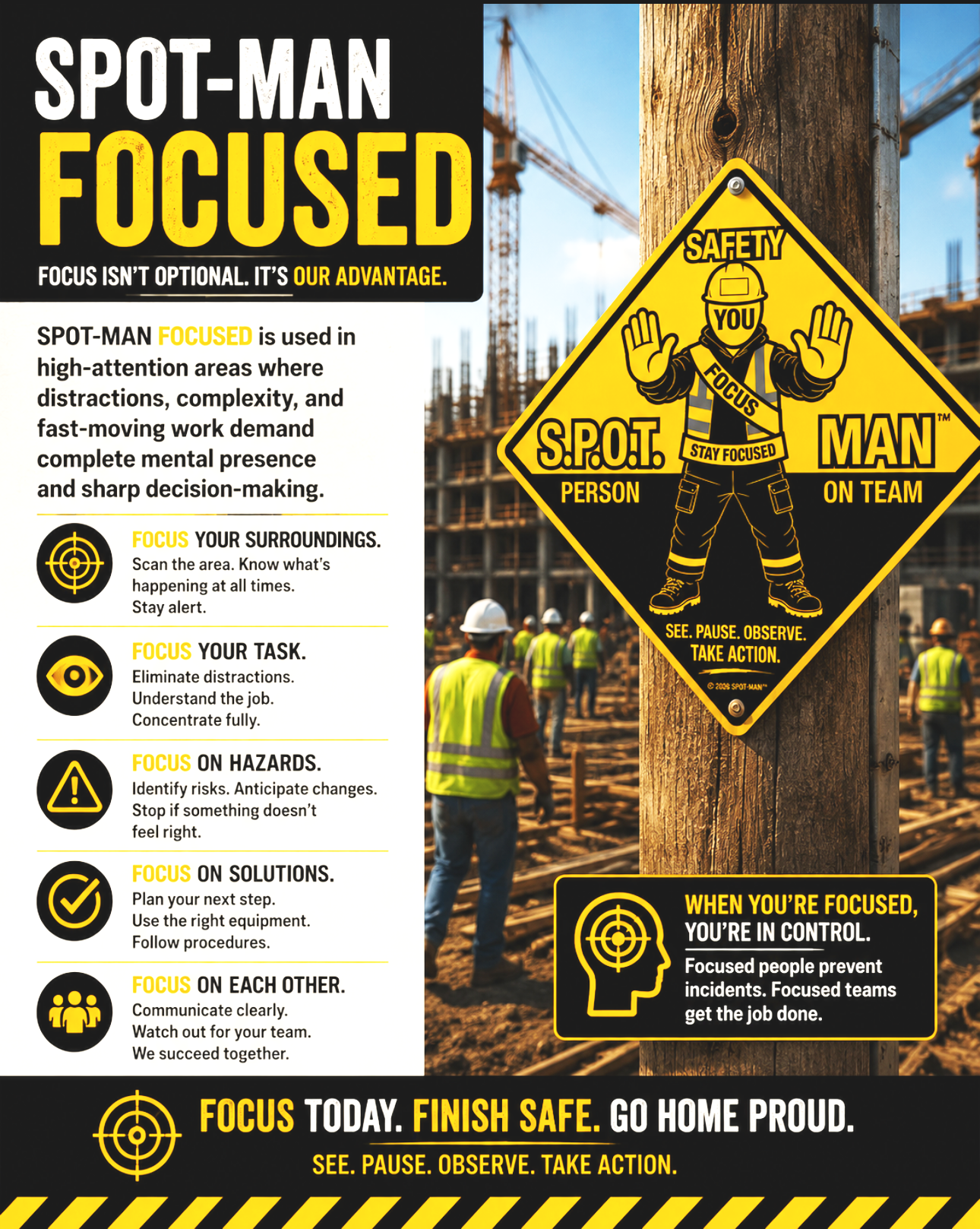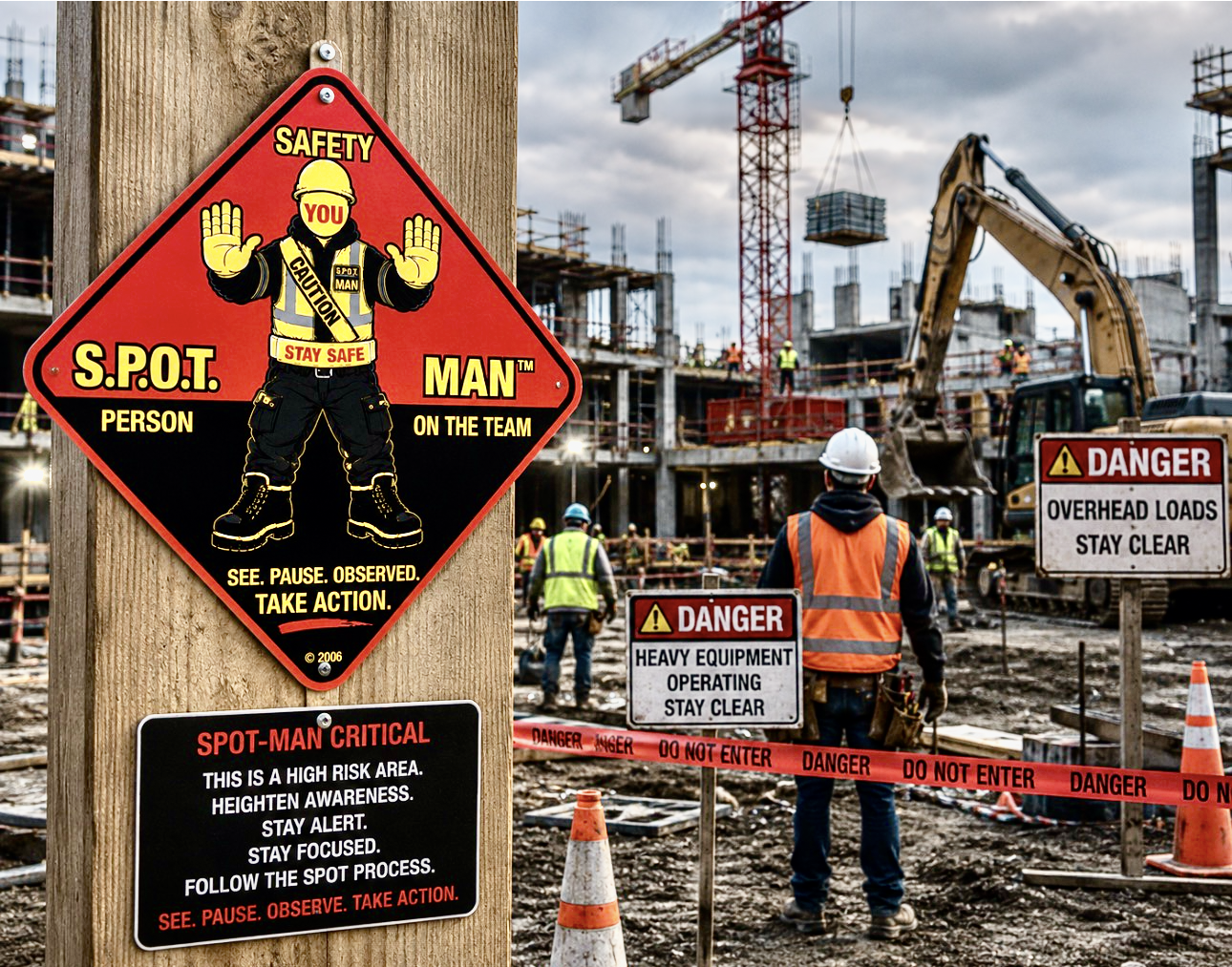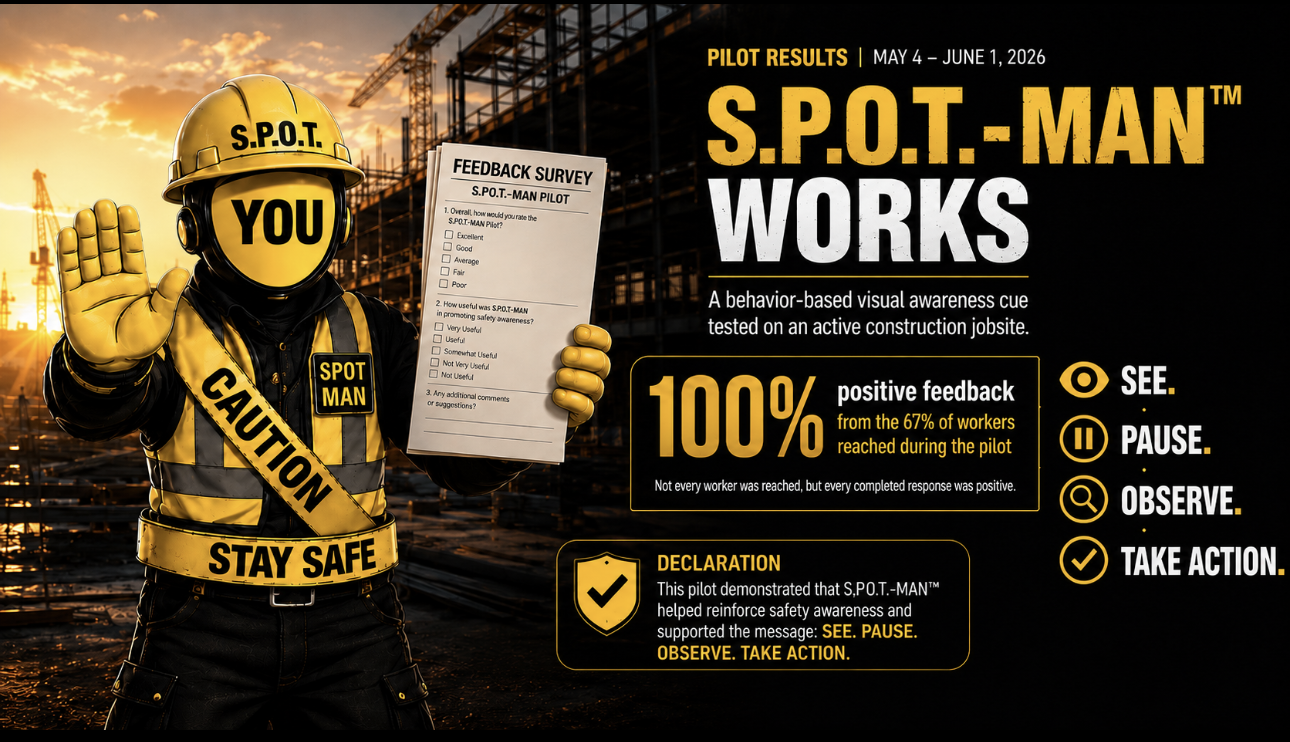
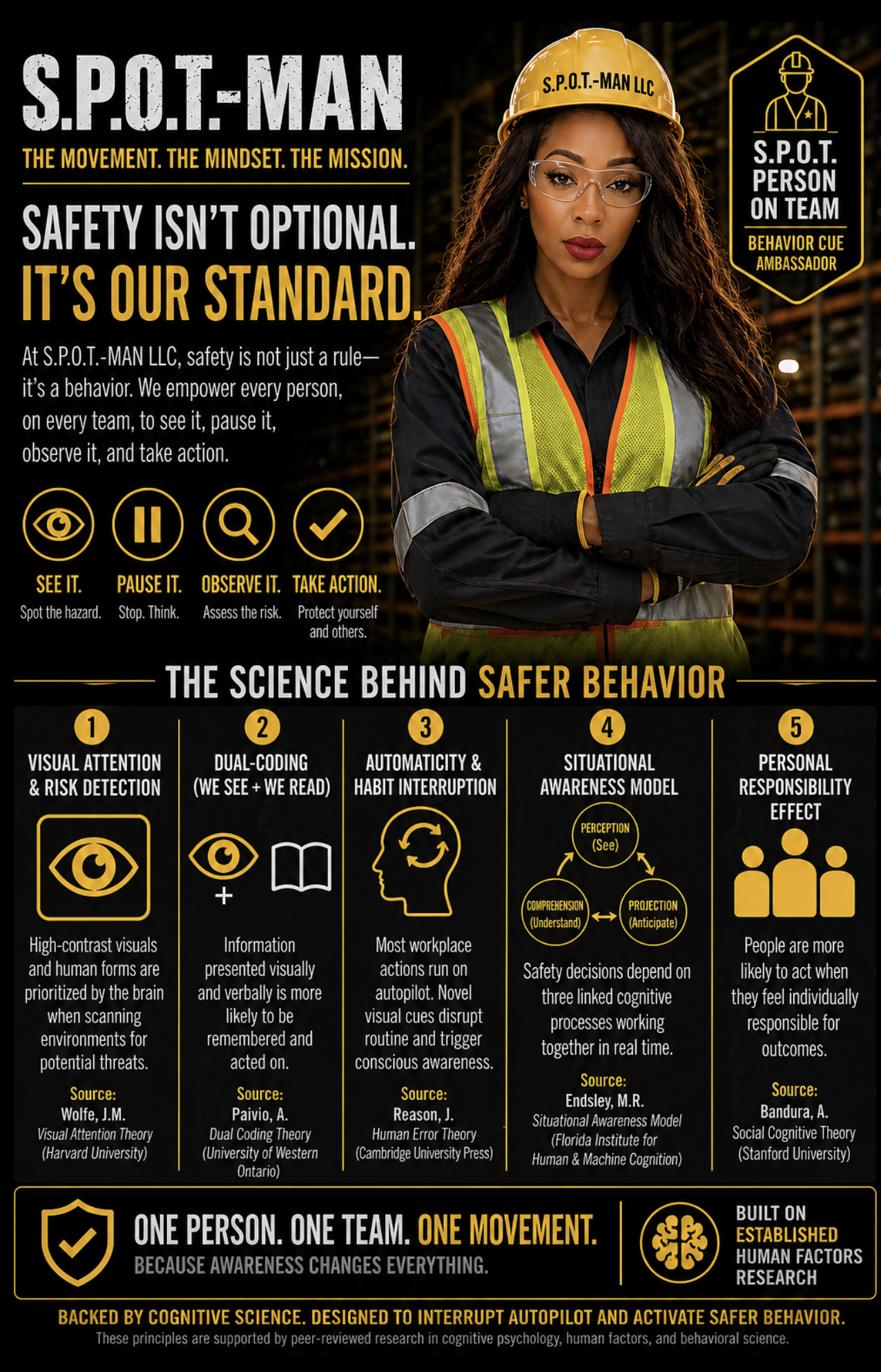
S.P.O.T.-MAN™
Safety Person On Team / Mindful Awareness Nudge
A safety sign should not just sit on a wall.
It should interrupt autopilot.
That is the purpose behind S.P.O.T.-MAN™ - Safety Person On Team / Mindful Awareness Nudge.
On a busy jobsite, people can become familiar with hazards. Familiarity can turn into habit. Habit
can turn into jobsite blindness. That is when workers walk past risks they would normally
recognize.
S.P.O.T.-MAN™ is designed to break that pattern.
The goal is simple:
• Do I see the hazard?
• Do I understand what changed?
• Am I about to walk past this like it is normal?
• Do I need to speak up?
Over time, this can become part of the jobsite language:
"Do you see that S.P.O.T.-MAN™ sign?"
"That means stop and check yourself."
"That means this area needs awareness."
"That means don’t walk past the warning."
Just like a stop sign creates a universal response, S.P.O.T.-MAN™ is built to become a visual
behavior cue.
Not just a sign. A system. A reminder. A jobsite awareness tool.
A way to help workers break autopilot before autopilot becomes an incident.
See. Pause. Observe. Take Action.
That is what S.P.O.T.-MAN™ is b
Built for the Moment Before the Mistake
The safety industry spends heavily on training, signage, audits, PPE, Behavior-Based Safety programs, insurance controls, and EMR management — yet workplace injuries still cost the U.S. an estimated $181.4 billion in 2024, and 5,070 workers lost their lives on the job that same year. Companies know safety matters because injuries affect people first — but they also affect productivity, workers’ compensation, insurance premiums, bid opportunities, and EMR. OSHA’s own business case shows that injury prevention can return real value, with many CFOs reporting that each dollar invested in safety returns $2 or more.
But S.P.O.T.-MAN™ looks at safety from a different angle.
Most safety signs give workers a rule: “Wear PPE.” “Do Not Enter.” “Danger.” “Caution.” Those signs are necessary — but after workers see them every day, the brain can begin to tune them out. That is jobsite blindness. That is habituation. That is autopilot. Workers are not always ignoring safety on purpose; sometimes the environment becomes so familiar that the warning loses its power.
S.P.O.T.-MAN™ is different because it is not designed to force safety at the worker — it is designed to wake safety back up inside the worker.
S.P.O.T.-MAN™ works as a visual awareness interface: a bold, human-centered cue placed where attention matters most. Instead of simply telling a worker what rule exists, it interrupts autopilot and reminds them: SEE. PAUSE. OBSERVE. TAKE ACTION. It brings the worker back into the moment before the decision, before the shortcut, before the blind step, before the incident.
Behavior-Based Safety programs often rely on observation, feedback, and correcting at-risk behaviors after they are seen. S.P.O.T.-MAN™ supports that same safety goal, but from the opposite direction: it places the cue directly in the work environment so the worker can self-check before someone else has to correct them. It is not a replacement for OSHA signage, BBS, or company safety systems. It is the missing visual nudge between the rule and the behavior.